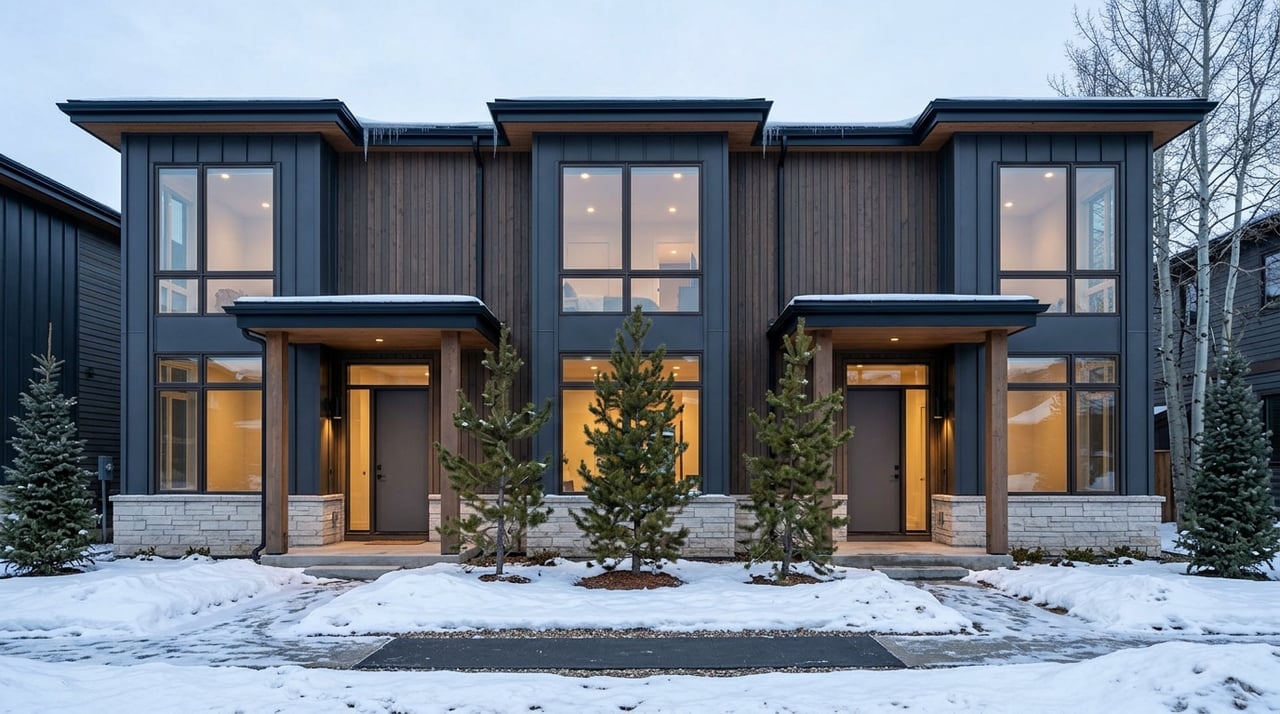
Understanding Frisco Short-Term Rental Rules As A Buyer
April 2, 2026
April 2, 2026
If you are buying in Frisco with short-term rental income in mind, one detail can change the whole equation: you cannot assume a property purchase comes with the right to rent it short term. Frisco has a capped licensing system, annual compliance requirements, and property-specific rules that can affect your plans before you ever host a guest. If you want to buy smart, this guide will help you understand what to verify, what questions to ask, and where buyers can get tripped up. Let’s dive in.
In Frisco, a short-term rental is a dwelling unit rented for less than 30 consecutive days. The town requires an STR license before a property is advertised or rented, according to the Town of Frisco STR FAQ.
That matters because STR use is not automatic just because a home seems like a good rental candidate. The town regulates short-term rentals to balance tourism with concerns such as parking, trash, wildlife, and noise, so buyers need to treat STR eligibility as a core part of due diligence.
One of the biggest issues for buyers is Frisco’s license cap. The town currently caps STR licenses at 25% of residential housing stock, which it says equals 900 licenses based on 3,600 residential units. Frisco also states it began using a waitlist after reaching the cap in February 2023, as explained in its short-term rental guide and FAQs.
For buyers, the key takeaway is simple: a property may be physically suitable for short-term rental use but still not be immediately licensable. If you are underwriting a purchase based on projected rental income, the existence of the cap and waitlist should be part of your decision before you write an offer.
This is one of the most important Frisco rules for buyers to understand. The town says STR licenses are not transferable when a property is sold, and only one dwelling unit may be rented per STR license. Each unit needs its own license.
That means a seller’s current STR status does not automatically carry over to you. Even if the home has been rented successfully in the past, you need to confirm what happens after closing and whether your own path to licensing is realistic.
Frisco does describe a limited legacy exception for certain buyers who were under contract or had a building permit application on or before October 11, 2022. Those buyers may be able to request an STR account number and apply outside the cap process, subject to the town’s timing rules after closing or certificate of occupancy, according to Frisco’s application instructions.
For most current buyers, this will not apply. Still, if you are evaluating a unique property history, new construction timeline, or older contract situation, it is worth verifying whether the exception has any relevance to your purchase.
Before you get too far into numbers, make sure you are evaluating the correct parcel and the correct jurisdiction. Frisco’s application materials rely on the Summit County Assessor schedule number, proof of ownership, parking plan, emergency contact, rental-agent contact, and tax-filer contact, as outlined in the town’s how to apply page.
This is why buyers should not rely on a mailing address alone. A property may have a Frisco mailing address but fall outside Frisco town boundaries, which could place it under a different STR system entirely.
If a property is outside Frisco town limits, Summit County has its own short-term rental program, including separate license categories and a 24/7 responsible-agent requirement, as shown in the county’s STR acknowledgements and affidavit.
If you are comparing homes in and around Frisco, this distinction matters. Two nearby properties may look similar from an investment standpoint, but their rental rules, licensing path, and operating requirements may be very different.
Occupancy and parking are two of the most practical constraints for Frisco STR owners. Under current town guidance, allowable occupancy is two occupants per bedroom plus four additional occupants, and the parking plan must show allowable parking, based on the Frisco STR guide.
The same guidance says vehicles may not be parked on landscaped areas, public streets, or rights-of-way, and no one may sleep overnight in a parked vehicle. In real terms, that means buyers should look beyond bedroom count and ask whether the actual parking setup supports the property’s intended guest use.
A property with limited off-street parking may have more operational limits than you expect. That can affect guest experience, advertising, compliance, and how comfortably the home functions as a short-term rental.
For condos, townhomes, and compact in-town properties, parking deserves special scrutiny. A beautiful unit in a great location may still be a poor STR fit if the parking plan is tight or restrictive.
If you are buying in a condo, townhome, or community with an owners association, HOA review is essential. Frisco requires the guest information notice to include any applicable HOA policies specific to the property, which signals that association rules may directly shape how an STR can operate, according to the town’s FAQ guidance.
Before closing, review the governing documents carefully. You want to know whether the HOA allows rentals under 30 days, whether there are guest rules, parking limits, quiet hours, registration requirements, or any minimum-rental-term language that conflicts with your intended use.
Frisco’s rules go beyond licensing. The town requires a life-safety affidavit, a parking plan, and an information notice for guests, according to its application materials.
Buyers should also understand the day-to-day nuisance-management side of ownership. Frisco’s published materials prohibit outdoor camping and overnight RV or trailer use, and they require the STR license number and approved maximum occupancy in advertising. The town also publishes Good Neighbor Guidelines within its STR materials that address parking, wildfire prevention, trash and recycling, and neighbor respect.
Revenue is only part of the picture. Frisco states that the total tax burden for STR bookings is 15.725%, made up of multiple state, county, and town taxes, including the town’s 5% STR excise tax for stays with checkout dates on or after June 1, 2022, according to the town’s short-term rental taxes and payments page.
The town also says gross STR revenue includes non-optional fees such as booking, cleaning, pet, extra-vehicle, and extra-guest charges. If you are building a rental pro forma, this is the kind of detail that can materially affect your net income assumptions.
Frisco requires STR tax returns to be filed through its GovOS/MUNIRevs system, with filing frequency depending on the account. The town also states that owners remain responsible for confirming tax settings even when a booking platform collects some taxes.
In other words, platform collection does not remove the need for oversight. Compliance is still your responsibility, and mistakes can carry real consequences.
Frisco licenses expire annually on April 30. The town’s published guidance currently shows slightly different renewal-window language on different pages, with one page stating February 20 to April 30 and another stating February 21 to March 31. The shared takeaway from the town’s STR guidance is that buyers should confirm the current deadline directly with STR Support if timing matters to a purchase or closing plan.
Enforcement is also worth taking seriously. Frisco maintains a 24-hour complaint hotline for parking, noise, trash, occupancy-limit violations, and suspected unregistered STRs, and the town says unlicensed short-term renting can be enforced with fines of up to $1,000, as noted on its complaint and enforcement page.
The town also says licenses may be suspended or revoked for repeated code violations, safety-code issues, tax noncompliance, false application information, or operating during a suspension. For buyers, that means compliance history and operational readiness should be part of your acquisition review.
If short-term rental use is part of your purchase strategy, ask questions in three buckets: seller or listing side, HOA or property manager, and your legal or tax advisors. Frisco’s own materials support this type of diligence-focused approach through the application and requirements process.
The practical takeaway is clear: buying an STR in Frisco is not just about finding an attractive mountain property. It is about confirming the right parcel, the right jurisdiction, the right parking and occupancy setup, and a realistic path through Frisco’s capped and licensed system.
When you approach the purchase with that level of care, you give yourself a better chance of buying a property that fits both your lifestyle goals and your operating plans. If you want guidance on evaluating Frisco and greater Summit County properties with STR considerations in mind, Jeff Scroggins & Paige Johnson offer a thoughtful, concierge-level approach tailored to complex mountain real estate decisions.
Stay up to date on the latest real estate trends.

Discover the power of local expertise. Jeff and Paige possess an in-depth knowledge of the Breckenridge real estate market, ensuring you find the perfect property that aligns with your unique needs and desires.