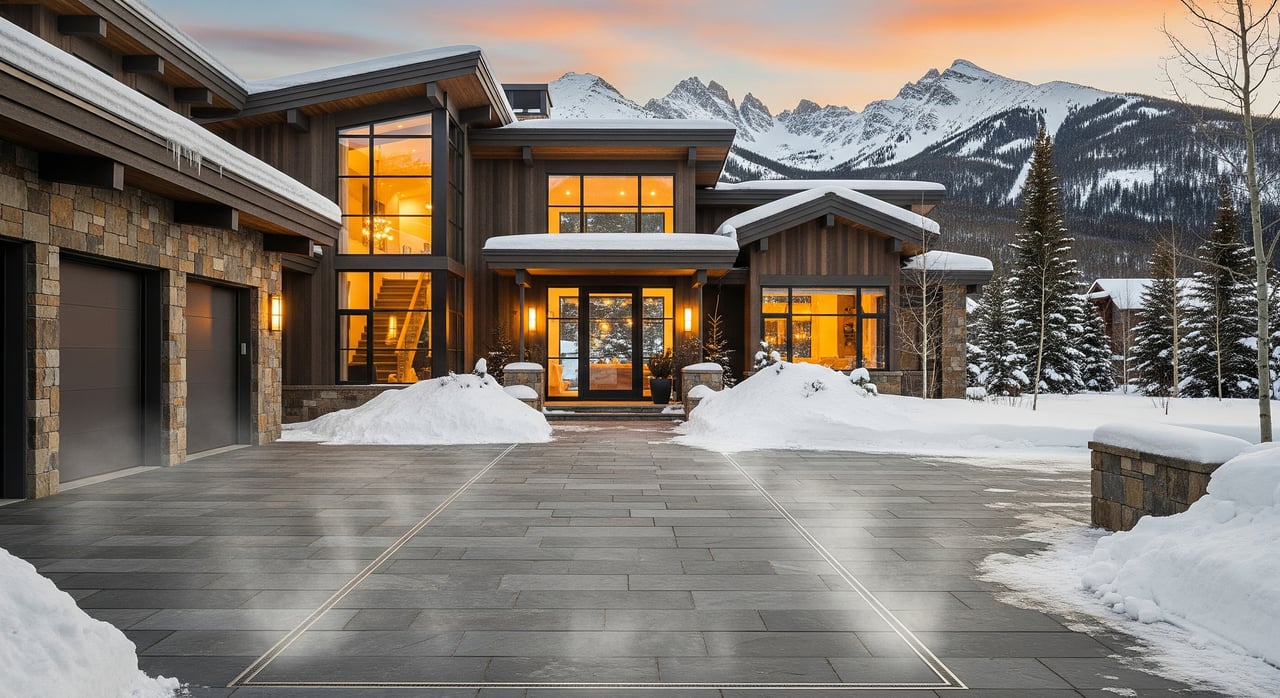
Snow Melt Systems in Silverthorne: Comfort, Cost & ROI
November 6, 2025
November 6, 2025
You buy a mountain home for fresh snow days, not 5 a.m. shoveling. In Silverthorne’s long, stormy winters, keeping driveways and walkways clear can feel like a second job. If you’re weighing a snow‑melt system, you’re asking the right question: can you get year‑round comfort and reliable access while also protecting ROI? In this guide, you’ll learn how electric and hydronic systems work, what they cost to run, and how to calculate payback for both luxury residences and short‑term rentals. Let’s dive in.
Silverthorne sits at high elevation with a cold season that brings recurring storms and freeze–thaw cycles. That means more frequent clearing needs and higher slip risk. A well‑designed system runs automatically during events, reduces ice, and keeps primary paths open.
In resort communities, guests and buyers often pay a premium for convenience and safety. For STR owners, reliable snow removal can influence occupancy, reviews, and willingness to pay. For homeowners, it protects your time and reduces hassle on peak winter days.
Electric snow‑melt uses heated cables or mats embedded under concrete, pavers, asphalt, or decking. The system converts electricity to heat at the surface and is controlled by sensors that detect temperature and moisture.
Pros: simpler install, precise zoning, low routine maintenance.
Cons: energy cost scales quickly on large areas or long runtimes.
Hydronic snow‑melt circulates a heated fluid, often a water and propylene glycol mix, through tubing beneath the surface. A boiler or water heater supplies heat and pumps move fluid through zones.
Pros: cost‑effective for large areas and extended storms; flexible fuel choices.
Cons: needs mechanical space and annual service; higher initial complexity.
Heated mats offer quick coverage for steps and key paths when permanent installation is not feasible. They are portable and seasonal. A common hybrid is hydronic for the driveway and electric for stairs, or a small permanent system at the entry paired with a plow contract for the driveway.
New construction lets you embed tubing or cable before placing concrete or pavers, which usually lowers installed cost per square foot. Retrofits often require saw‑cutting, removal, or paver lift and relay, which adds labor and complexity.
Poured concrete is ideal thermally and structurally. Pavers work well with proper edge restraint and bedding design. Asphalt can be heated with different details. Include insulation below heated slabs to reduce heat loss and shorten runtimes.
Confirm electric panel capacity and meter limits early. Large electric systems create high instantaneous loads during storms and may face demand charges depending on rate structures. Hydronic systems need room for the boiler and proper venting. Smart controls with temperature and moisture sensors and weather‑responsive logic help systems run only when needed and cut operating cost.
Check permitting with the Town of Silverthorne and Summit County to determine whether separate electrical and mechanical permits are required. Verify HOA design and visibility rules for equipment and vents. Plan slab slopes and drainage to route meltwater away from foundations and areas that could refreeze.
Electric systems are nearly 100 percent efficient at the point of use, but electricity often costs more per unit of heat than natural gas in many markets. That makes electric a strong fit for smaller or zoned areas and intermittent use, while hydronic tends to win on operating cost for large areas or long, continuous events. If your property uses propane, compare delivered fuel costs to local electricity rates to see which profile suits your usage.
Smart controls improve ROI. Moisture and temperature sensors prevent unnecessary cycles when surfaces are dry. Zoning lets you heat only the areas you need during lighter storms. Insulation under slabs and the thermal mass of concrete can reduce how long the system must run to maintain clear surfaces.
To estimate ROI, gather these inputs:
Heated mats shine for front steps, a short porch, or a narrow walk from garage to entry. They are fast to deploy and low cost upfront. Seasonal service contracts for plowing and deicing are practical when capital is limited or winter occupancy is light. For many STRs, a hybrid works: permanent heat at the primary entry for safe guest access, plus a reliable plow service for the driveway.
Use this quick checklist to move from idea to install:
Choose contractors with local mountain experience. Request references and photos of similar installations in Summit County. Verify who manages any slab repair if coring or cutting is required. Ensure combustion equipment meets venting and carbon monoxide safety codes, and install required monitors.
Electric systems are low maintenance. Plan simple checks after winter, confirm sensors work, and protect cable routes from post‑install drilling or coring. Hydronic systems need annual boiler service, pump and valve checks, and glycol testing. Expect mechanical components to need replacement before embedded tubing or cable. Keep as‑built documentation of tubing and cable routes for future work.
Energy source drives emissions. Electric systems reflect the grid mix, while hydronic systems burning natural gas or propane emit on site. If carbon goals matter to you, compare options with your energy provider’s outlook. Either way, insulation under slabs and smart controls reduce energy use and cost.
If you want reliable access, fewer headaches, and a safer arrival experience in Silverthorne, a snow‑melt system can deliver real value. Electric shines for small, high‑impact areas and retrofits. Hydronic works best for large surfaces and sustained storms. Many owners choose a hybrid to balance comfort and cost while protecting ROI, especially for STRs.
If you are planning a custom build or optimizing an STR asset, we can help you scope the right approach and connect you with experienced local installers. Connect with Unknown Company to discuss your goals and the neighborhood context, then Work With Us — Schedule a Bespoke Marketing Consultation.
Stay up to date on the latest real estate trends.



Discover the power of local expertise. Jeff and Paige possess an in-depth knowledge of the Breckenridge real estate market, ensuring you find the perfect property that aligns with your unique needs and desires.